Might & Magic Fates Heroes TCG
- 4.4
- Rating
- 100.00K
- Installs
- Free
- Price

 Analysis by App-foxy
I spent time with Might & Magic Fates as a mobile card game built around short strategic battles, deck decisions, and the constant temptation to try one more match. Its basic appeal is easy to understand: choose a plan, put your cards into action, watch the opponent respond, and then adjust when the plan breaks. That sounds familiar if you have played a collectible card game before, but the important question is whether the loop feels satisfying on a phone rather than merely looking good in a store description.
My impression is that this is best approached as a focused strategy game, not as a passive time-killer. You need to pay attention to what is happening on the board, think about how your current cards fit together, and accept that a promising opening can still collapse if you spend resources carelessly. Ubisoft Entertainment has positioned it for players who enjoy competitive card battles, and the Teen content rating fits the tone of a game where the emphasis is on fantasy conflict and tactical choices rather than realistic violence.
The game is free to start, which makes trying it straightforward, although purchases range from $0.99 to $199.99 per item. That price range matters when deciding how seriously to invest. I would begin without spending anything, learn how the progression and deck-building systems feel, and only then decide whether the extra convenience is worth it. The strongest reason to play is the battle loop itself, not the promise of collecting for its own sake.
You May Also Like

 Pandora - Music & Podcasts
Pandora’s Music Is Easy to Start, but Harder to Recover
Pandora’s strength is its low-effort path from a seed to a station. Its weak spot is how much confidence it asks you to place in connection, setup, and quiet recovery.

 8 Ball Pool
 Is Built on Rivalries, Rematches, and Routine
A close look at the rivalries, rematches, shared routines, and unanswered safety questions that turn a quick pool match into a persistent mobile community.

 Samsung Music
’s Quiet Strength Is Playing What You Already Own
Its reach comes less from spectacle than from dependable access to a personal library. That simplicity is both the app’s strongest retention engine and its ceiling.

 AccuWeather: Weather Radar
AccuWeather Review: A Quick, Clear Forecast for Everyday Decisions
For everyday plans, the best forecast is the one you can understand quickly. AccuWeather makes rain timing, radar, and local conditions easy to act on, with a few trade-offs.

 Hill Climb Racing
Why Hill Climb Racing Still Turns Crashes Into One More Run
A tiny car, a bumpy hill and one more upgrade: Hill Climb Racing keeps resurfacing because its simple chaos makes every near-miss feel personal.

 AliExpress - Shopping App
AliExpress Makes Global Shopping Feel Personal, but Shoppers Bear the Risk
AliExpress turns a global marketplace into a pocket-sized discovery engine. Its reach is useful, its shopping loop compelling, and its trade-offs easy to miss.
More From Our News Desk
View All News


How the first move turns into a real decision
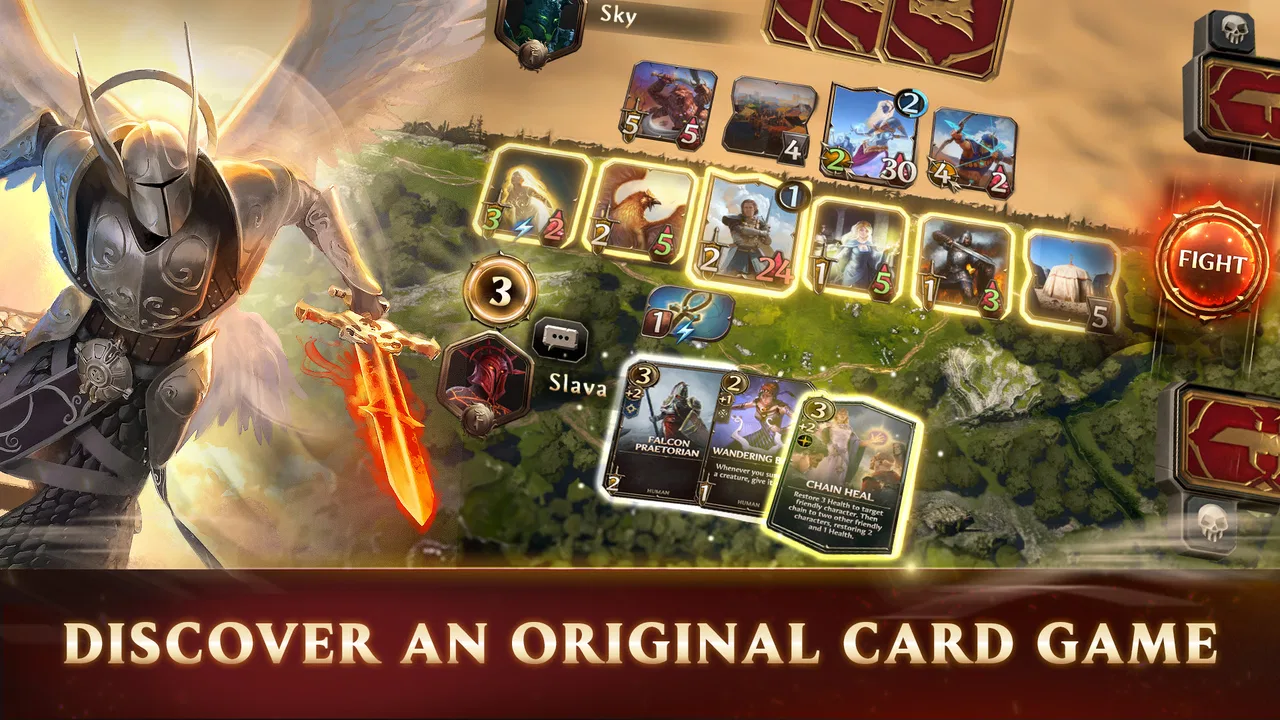
The first useful action is not simply pressing the battle button. It is looking at the deck you are taking into the match and asking what it is actually trying to do. A deck that contains powerful individual cards can still feel awkward if its cards do not support a clear rhythm. I found it more helpful to think in terms of an opening plan: establish pressure, protect a key threat, build toward a stronger turn, or force the rival to react before they are ready.
That small change in mindset makes the game more interesting. Instead of treating every draw as an isolated opportunity, I started judging cards by the situations they created. A card can be valuable because it advances my board, but it can also be valuable because it makes the opponent spend an answer early. This is one of the first non-obvious lessons here: a weaker-looking play may be better when it preserves flexibility for the next turn.
The Hero choice also gives the deck a sense of identity. I did not get the best results by selecting a favorite Hero and filling the deck with whatever looked strongest. The better approach was to decide what kind of match I wanted to create and then choose cards that reinforced that intention. If you enjoy experimenting, this is where the game has more depth than a quick glance suggests. Small changes to the list can alter how early turns feel, how comfortable you are when behind, and how often you have a useful answer in hand.
For a new player, I recommend resisting the urge to rebuild everything after one loss. First identify the moment the plan failed. Did the deck run out of useful plays? Did you spend a defensive card too soon? Did you keep a hand that looked powerful but was too slow? Making one or two deliberate changes is more informative than replacing half the deck and losing track of what improved.
The first battle therefore has two layers. On the surface, it is a contest between Heroes and cards. Underneath, it is a test of whether the deck gives you meaningful choices. When the answer is yes, even a defeat can teach you something specific. When the answer is no, the problem may be the deck’s structure rather than your execution.
The feedback rhythm keeps attention on the board
The most enjoyable part of the match is the exchange between action and response. I make a play, the board changes, the rival reveals information through their answer, and I have to reconsider the next step. That feedback rhythm is what separates a satisfying card battle from a sequence of automatic taps. Every action should either improve my position, narrow the opponent’s options, or prepare a stronger future turn.
I especially liked the moments when a move produced an immediate result but also created a delayed problem. Taking control of the board can feel excellent, yet committing too much at once may leave the next turn uncomfortable. This is where the game rewards restraint. A player who always chooses the largest visible attack may win some matches quickly, but a player who tracks the opponent’s likely response will usually make better decisions over a longer session.
One practical habit helped me more than I expected: before committing a card, I mentally planned the following action. I did not need a perfect forecast. I only needed to ask whether the play left me with another reasonable option if the opponent answered it. This is particularly useful when the match is moving quickly and the obvious play is also the most expensive one.
The feedback is not always positive, and that is part of the appeal. Sometimes a carefully prepared turn produces less than expected because the opponent has exactly the right response. That can be frustrating, but it also gives the match a readable cause and effect. I could usually point to a decision that made the situation worse, rather than feeling that the result was completely detached from my choices.
Players who prefer relaxed games may find this pressure tiring. Even when a match is short, the mental workload can be higher than in a simple solitaire card game. You are watching the current board, remembering what has already been used, and estimating what the other player may still hold. I would not choose this as background entertainment while watching a film. It asks for active attention.
Why deck building matters more than chasing a single strong card
Deck construction is where the game becomes personal. I enjoyed testing a list, noticing which cards felt stranded in hand, and then changing the balance rather than automatically adding more impressive options. A strong deck needs a sensible curve of actions, enough ways to recover when the opening goes badly, and a plan for closing a match before the opponent stabilizes.
One useful workflow is to build around a single clear idea first. Play several matches with that idea, record the turns where you had no good action, and then revise only those weaknesses. This is better than copying a powerful-looking list without understanding it. A copied deck may win when its ideal sequence appears, but it can feel helpless when the opponent disrupts that sequence.
Another trade-off is specialization. A narrow deck can be exciting when it finds the right matchup, while a flexible deck may perform more consistently but feel less dramatic. I preferred the latter while learning because it gave me more chances to practice decision-making. Once I understood the card interactions better, specialization became more appealing because I could accept its bad matchups as part of the design.
Collection-focused players should also think about the cost of experimentation. Since the game includes optional purchases, it is sensible to avoid treating every new card as a reason to spend immediately. The smarter test is whether the card changes how you play or merely looks stronger than what you already own. If it does not create a new decision, it may not improve your experience as much as refining the deck you already understand.
This is also where the game differs from a traditional physical card game. A phone game makes it easier to jump into a match and adjust a list quickly, but that convenience can encourage constant rebuilding without enough testing. I had better results when I treated each version of a deck as an experiment and played enough matches to see its recurring strengths and weaknesses.
The reward is not only the win screen
Winning is obviously the clearest reward, but it is not the only reason I wanted to start another match. A good battle leaves behind a question: would a different opening have worked, could I have saved that answer, or did the deck need a small adjustment? That sense of unfinished understanding is what pulled me back more reliably than a simple victory counter.
Progression and collection provide another layer of motivation. Building a stronger roster gives you more room to explore different approaches, but I found the process more satisfying when I connected new additions to a practical goal. Instead of collecting without direction, I asked whether a new card helped solve a problem in my current list or opened a strategy I genuinely wanted to try.
The game’s free entry is useful here because you can discover whether that collection loop suits you before committing money. I would recommend setting a personal limit in advance, especially for anyone who knows they are vulnerable to spending after a frustrating losing streak. A purchase may make experimentation easier, but it cannot replace learning when to hold a card, when to trade resources, or when to abandon a bad line.
For everyday use, the reward structure fits a short break. If I had a few minutes before an appointment, I could use the time to review a deck or play a match rather than needing a long uninterrupted session. The important distinction is that a short session can still be mentally complete: I make a plan, see whether it works, and leave with a result or a clear lesson.
That makes it more engaging than many casual card alternatives, but less effortless. A simple matching game can be played while tired or distracted. Might & Magic Fates asks me to remember context and react to an opponent, so it is more rewarding when I am in the mood to think. The trade-off is fair, but it should be clear before downloading.
What happens after a loss and why the reset works
The reset after a match is one of the strongest parts of the loop. A loss does not have to end the evening because the next attempt begins with a small piece of new information. I might change the opening hand I keep, alter one card, or decide to protect a different target. That reset gives the game a natural “one more try” quality without requiring every match to feel like a dramatic event.
Still, the reset can become repetitive if you approach it without reflection. Playing immediately again after every defeat may simply reproduce the same mistake. I found it more useful to pause briefly and name the problem in plain language: too slow, too fragile, poor answer timing, or unclear win condition. That diagnosis turns the next match into a test rather than a replay.
There is also a limit to how much resetting helps when the collection or deck is not ready for the strategy you want. In that situation, changing your play may only solve part of the issue. A player who enjoys gradual improvement will probably tolerate this better than someone who expects every loss to be fixed through skill alone. The game sits between a pure strategy puzzle and a collection-driven competitive title, so both decision quality and available options can influence the experience.
I would skip it if you dislike repeating matches to learn patterns, or if you want a card game with no competitive pressure. I would also be cautious if your main goal is a completely predictable offline pastime. This experience is more appealing to players who enjoy adapting to another person’s choices and rebuilding after a failed plan.
On the other hand, it is a good fit for someone who likes fantasy themes, deck tinkering, and matches that can be revisited from several angles. The Hero-centered structure gives experimentation a recognizable focus, while the card format keeps each battle understandable enough to study. You do not need to be an expert before starting, but you do need patience during the learning curve.
How it compares with familiar card-game alternatives
Compared with a traditional tabletop card game, this is more convenient and easier to carry into spare moments. You do not need another person beside you, a physical collection, or a table large enough for a full setup. The downside is that the digital format can make progression and purchases more prominent in your decision about how far to go.
Compared with a simple single-player card game, it offers more meaningful opposition because another player’s choices can disrupt your plan. That creates better stories inside a match, but it also means the result may feel less relaxing. If you want a calm routine with no opponent to surprise you, a solitaire-style alternative will likely be a better match.
Compared with other collectible card games, its strongest identity comes from combining Heroes with deck construction and direct competitive battles. I would not choose it solely because it is free, since many games share that starting point. I would choose it if the fantasy framing and the process of shaping a deck around a Hero sound more appealing than the systems in games you already play.
The practical comparison is simple: choose this when you want a portable competitive loop with room for experimentation; choose a lighter card game when you want instant, low-attention entertainment; choose a deeper tabletop-style alternative when you prefer long planning sessions and extensive physical or social play. Might & Magic Fates occupies the middle ground, offering enough strategy to reward study without requiring a full evening for every attempt.
Its current version is 1.32.910, and the game requires Android 7.0 or later. Those details make it accessible to many Android users, though compatibility alone does not determine whether it will feel comfortable on a particular phone. Card games are often easy to launch, but the real test is whether the interface remains clear when several effects and decisions arrive close together.
Who should start, and how I would approach the first week
I would recommend starting slowly rather than trying to unlock or test everything at once. Begin with one Hero and one deck concept. Learn what your early turns are supposed to accomplish, then pay attention to the turns where your hand stops cooperating. Those moments reveal more than a win achieved through an unusually strong draw.
After a few sessions, make a small revision and test it again. Keep a card only if you understand the job it performs. A card that looks exciting but rarely has a good timing window may be taking space from something more dependable. This method also helps control spending because you are evaluating actual gaps in your deck rather than reacting to every new option.
For a commuter or someone with a regular short break, the game can fit neatly into a routine: review the deck before the break, play a match with one specific goal, and stop after identifying what worked. That approach makes the action-feedback-reward-reset cycle feel purposeful. It also prevents the common problem of continuing after your attention has faded and then blaming the game for careless decisions.
Families should note the Teen rating and decide whether the fantasy conflict suits the intended player. Competitive-minded teenagers and adults are the clearest audience, especially those who enjoy discussing deck choices and learning through repeated matches. Players looking for a gentle game for younger children should look elsewhere.
The audience score is a 4.4 average from around 11 thousand ratings, with over 100 thousand installs. I read that as a sign of healthy interest rather than a guarantee that every player will enjoy the same aspects. The number is encouraging for someone who wants an active community around a competitive card game, but personal preference still matters more than popularity.
My verdict on the complete action-to-reset loop
After playing through the loop repeatedly, I think the game succeeds when you treat each match as a compact strategic experiment. The action is choosing a line and committing cards. The feedback is the board changing in response. The reward is a win, a useful collection step, or a clearer understanding of your deck. The reset is the chance to revise one decision and see whether the next attempt improves.
That loop is strong enough to make me recommend Might & Magic Fates to players who want a free fantasy card game with competitive pressure and room for deck experimentation. I would not recommend it as a mindless filler game, and I would not advise spending heavily before learning whether its battle rhythm suits you. Its optional purchases, including items priced as high as $199.99, make self-control part of the practical experience.
My final advice is to download it with a learning goal rather than a collection goal. Try to understand one Hero, build around one plan, and let your losses show you what needs changing. If that process sounds enjoyable, the next session has a real reason to begin. If you want instant wins, no repetition, or a card game that can run in the background, this is probably not the right choice.
As a free-to-start card game from Ubisoft Entertainment, it offers a convincing middle ground between casual accessibility and serious tactical attention. The best moments come when a modest decision changes the whole match and you recognize, a turn later, why it mattered. That is the kind of feedback that keeps the game from becoming just another sequence of taps.
FAQs for Might & Magic Fates Heroes TCG
01What is Might & Magic Fates TCG?
Might & Magic Fates TCG is a tactical card game that blends the classic elements of the Might & Magic universe with strategic card-based gameplay. Players can collect, trade, and battle using a variety of cards that represent heroes, spells, and creatures. The game offers both single-player campaigns and multiplayer modes.
02Is Might & Magic Fates TCG free to play?
Yes, Might & Magic Fates TCG is free to download and play. However, it contains in-app purchases that allow players to buy card packs, cosmetics, and other premium content to enhance their gameplay experience. While these purchases can provide advantages, they are not necessary to enjoy the game.
03What platforms is Might & Magic Fates TCG available on?
Might & Magic Fates TCG is available on both Android and iOS platforms. Users can download it from the Google Play Store for Android devices and the App Store for iOS devices. The game is optimized for a wide range of smartphones and tablets, ensuring a smooth gaming experience.
04Can I play Might & Magic Fates TCG offline?
Might & Magic Fates TCG requires an internet connection for most of its features, including multiplayer battles and updates. However, there are certain single-player campaign modes that can be played offline, allowing you to enjoy the game even when you're not connected to the internet.
05How does matchmaking work in Might & Magic Fates TCG?
The matchmaking system in Might & Magic Fates TCG is designed to pair players of similar skill levels for a balanced and competitive experience. It considers factors such as player rank, win-loss ratio, and card collection strength to ensure that matches are fair and challenging for all participants.
Pros
- Immersive fantasy world and lore.
- Strategic gameplay with varied tactics.
- Frequent updates with new content.
- Engaging multiplayer modes.
- Stunning graphics and animations.
Cons
- Requires constant internet connection.
- Steep learning curve for beginners.
- In-app purchases can be pricey.
- Occasional matchmaking imbalances.
- Battery drain on extended play.

Might & Magic Fates Heroes TCG
Gallery